


Member Spotlight: Float

6 August 2026
This month's spotlight turns to Andy Pennington, Founder and Creative Director of Float, an architectural visualisation studio working with developers, architects, and interior and landscape designers. From miniature models as a kid to a two-city studio spanning Glasgow and Manchester, Andy shares how Float tells the stories behind a building before it's ever built.
Share:
Hi Andy! It’s great to meet you. Can you tell us a little about Float?
I'm Andy Pennington. I'm the founder of Float. We turned seven this May, and we specialise in architectural visualisation, mostly for developers, architects, real estate professionals, interior designers, and landscape architects. We're brought in at all sorts of stages of the design process; sometimes really early for conceptual work, sometimes quite late for planning submissions, and sometimes mid-level for communication, marketing, and design support.
Was there a specific moment that made you think, this is what you wanted to do?
Truthfully, I've always admired people who ran businesses, so a part of me always wanted to run a studio. But since a really young age I've been into models of things, recreating things in miniature, and it felt like a natural progression through architecture to get to this point. There isn't one single pivotal moment, I think it was more a collective momentum gathering. There's definitely a play in there, but I love doing it.
Walk me through what happens between an architect handing you their plans and the final image. What do most people not realise goes into the whole journey?
I think what most people don't realise is what actually happens before you're even handed the plans. It's really important to have a good scoping discussion on the brief, and to dig down to understand if the brief is technically right at that point. You want to be advising the client on an outcome — what are they trying to achieve, asking the right questions. Ultimately, what we do with visualisation is tell stories about design and communicate it, and that has to invoke some emotion. It needs to communicate the intent well and reach people. To do that effectively, you have to spend that time at the early stage of a project, not necessarily before you've looked at a drawing, but definitely before launching straight into creating visuals.
What's the most unexpected thing a visualisation has ever helped someone achieve?
Visualisation needs to be outcome driven, which means it needs to be effective. As a visualisation artist, there are few things more rewarding than knowing the visuals you've created have helped achieve something. We've had instances where the second a visualisation hit the table in a difficult planning discussion, it changed the course of the conversation. We've also had people see our visuals and immediately think, "actually, we didn't think the design was going to look like that, we need to rethink this." I actually think that's really valuable, the fact that your visuals have shaped the course of the design, architectural or interior. I think it's one of the best things a visualiser can do, because ultimately we're all trying to get to the same place.
You're based in Glasgow with a Manchester office. What made you choose COLONY and have it in this city?
Our journey has taken us, I'd say, to the top of Scotland in terms of the visualisation sector. We're doing really well there, but it was always an intention for us to be UK-based. There's so much good happening throughout the UK that we wanted to be part of. We did look at London, but there's so much going on, so much noise, and I felt there were probably better places for us. We always fancied Manchester, it’s such a brilliant city, everything's here, I love it, there's so much going on. I think it's a really good demonstration of what happens when you invest in the trajectory of your city. It just felt like a natural place for us to be - that said, we work as one solid unit, whether we're in Glasgow or Manchester.
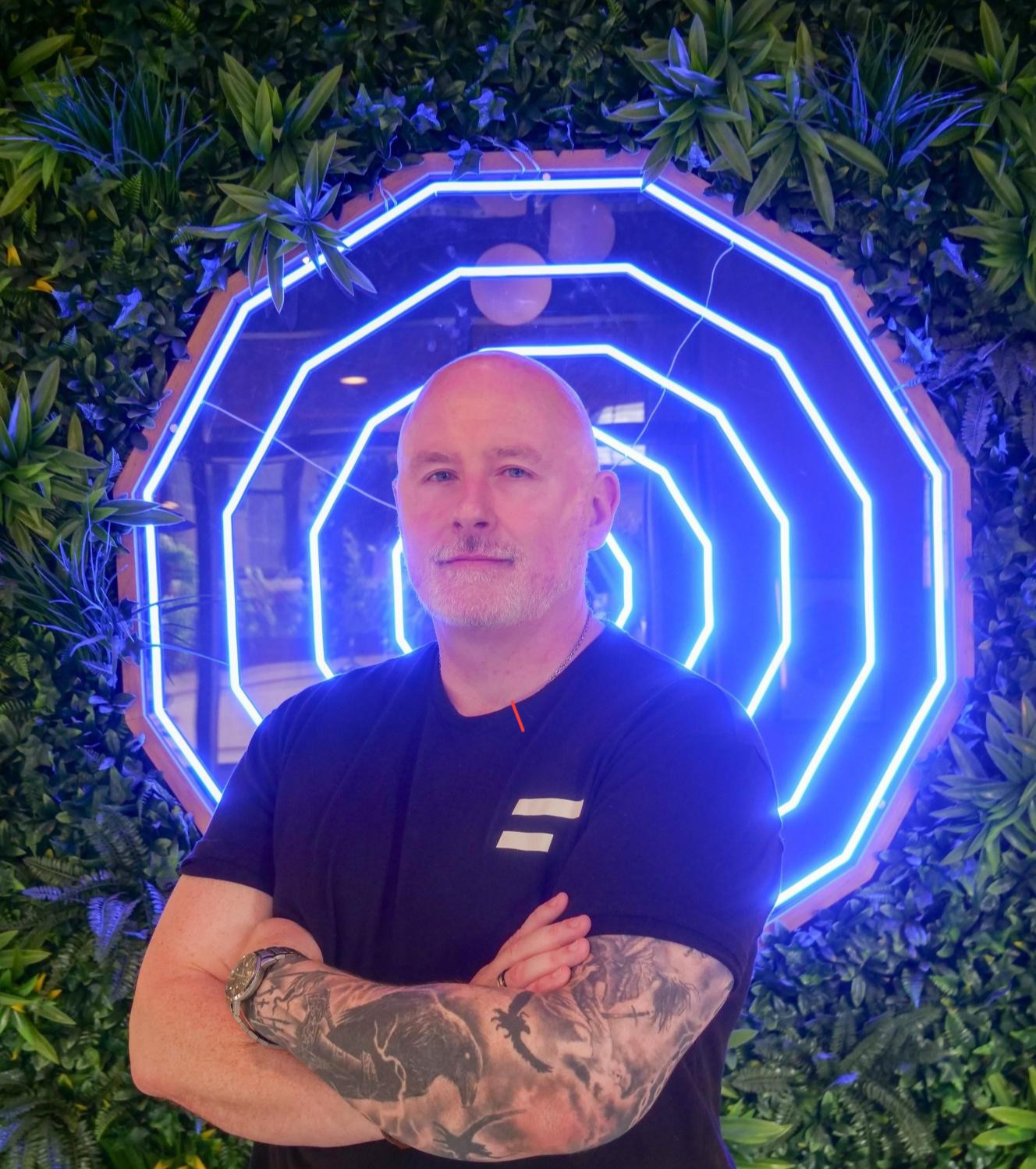
Why One Silk Street?
Your work environment is really important. Everything from productivity to how you feel about yourself. The more you step into COLONY, it just feels different. We looked around at other places, but the moment we set foot in COLONY, I knew there was a place for us. We also really value being amongst other similar professionals to us, I think that's actually really important too.
AI image generation is everywhere right now. What are your thoughts on it?
It's a really important subject. Everybody's talking about it, every conversation seems to find its way to AI. We've actually been using AI for years in some capacity, but we've taken it a lot more seriously in the last six to nine months, particularly on the detail-enhancement side. The great thing about AI is its shortcutting work that would traditionally have taken a lot more time, which means we can repurpose that time back to our clients, either as more iteration, or going even deeper into the project. It's empowered us to do things we could probably already do, but that would have taken weeks and a large budget. Now we can get there quicker, and ultimately the clients benefit.
I think it's positive overall, though there are considerations for the future, it's definitely going to impact our industry, and we'll have to adjust how we work. It may be in a few years down, the way we produce visualisation looks completely different. But you'll still need visualisation, and you'll still need humans doing it, because ultimately you need a human to make decisions. AI can help make it clearer what decisions to make, and faster, but it should be taken seriously and there's a lot of opportunity in it too.
Where do you see Float in five years?
We'll have a bigger team in Manchester, for sure. Personally, I think visualisation studios work best when they sit around 10 to 12 people, because you end up with a team that's really synchronised, where everyone knows what everyone else does and where their strengths are. If Float continues to grow, which we hope it will, it might well be that we open another studio of a similar size. I'm also thinking about a studio internationally; I'd love to open somewhere with real intention behind it, maybe Australia. We'll see where the trends take us, but we've always got our eye on the future, and I'd love to see us doing what we already do really well, just doing more of it.
What's the project you haven't done yet that you'd love to do?
Good question, across our breadth of artists, we've probably touched on just about every area. We've done quite a lot of master planning work in the past, including in the Middle East, but there are so many aspirational plans for growth here in Manchester that I'd really love to be involved in wider, longer-term visions like that. The most benefit our clients tend to get from us is when they partner with us early — you get a synergy, you understand how each other works, and it gives us the opportunity to leverage so much more value out of the visualisation process. On larger, longer-term projects, you can really use that to understand lifestyle and what the regeneration aspect looks like effectively. I'd love to do some more work on tall buildings too — that kind of thing is really interesting.
We love having Float at One Silk Street, and we can't wait to see where their journey takes them.
Keep up to date with all the goings on at COLONY. Follow us on LinkedIn, Instagram and TikTok
This month's spotlight turns to Andy Pennington, Founder and Creative Director of Float, an architectural…
We have been featured as one of the best co-working spaces and places to hot desk in Manchester by I…

July's member's spotlight turns to Sam Broadhead, Co-Founder of Deviation, a marketing agency working…